USMNT’s Road to 2026: Tactical Shifts & Player Formations
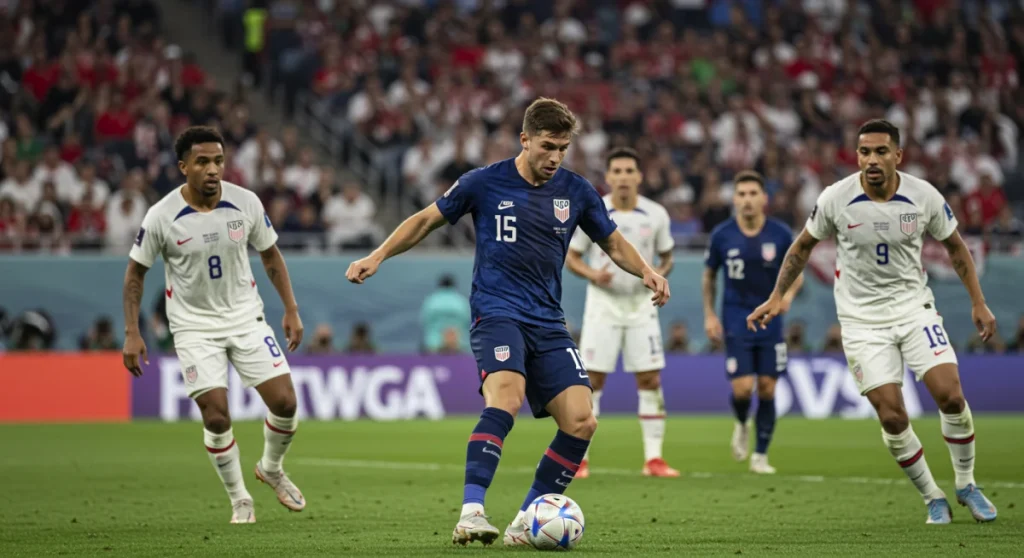
The USMNT’s journey to the 2026 World Cup involves significant tactical adjustments and player integration, meticulously planned to leverage home-field advantage and capitalize on a promising generation of talent.
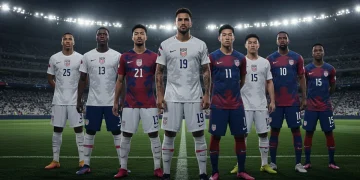
As the countdown to the 2026 FIFA World Cup on home soil continues, the anticipation surrounding the USMNT 2026 World Cup campaign intensifies. The next 18 months are crucial for Gregg Berhalter and his squad as they fine-tune tactical approaches and solidify player formations, aiming to make a significant impact in front of their fervent supporters.
Evolving Tactical Philosophies Under Berhalter
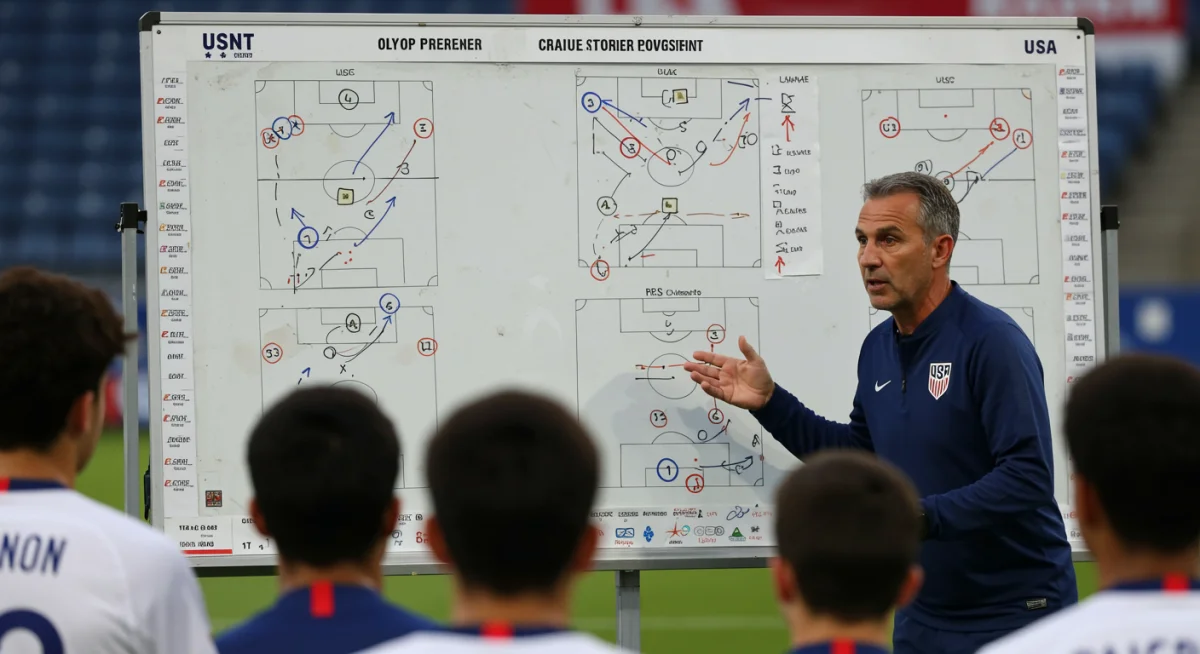
Gregg Berhalter’s return as head coach has brought with it a renewed focus on tactical flexibility and player adaptability. His initial tenure saw the development of a distinct possession-based style, often utilizing a 4-3-3 or 4-2-3-1 formation. However, the demands of international football, especially against top-tier opposition, necessitate a more dynamic approach.
The lessons learned from the 2022 World Cup in Qatar highlighted areas for improvement, particularly in breaking down resilient defenses and maintaining consistency over 90 minutes. Berhalter is now expected to integrate more strategic variations, ensuring the team can pivot effectively during matches and counter diverse opponent strategies.
The Shift Towards Positional Play and Pressing
The USMNT is likely to continue emphasizing positional play, but with an added layer of aggressive pressing. This involves players occupying specific zones to create passing triangles and numerical advantages, while simultaneously being prepared to hound opponents who gain possession. The aim is to control the tempo of the game and recover the ball quickly in advanced areas.
- High Press Execution: Developing coordinated pressing triggers to disrupt opponent build-up.
- Midfield Control: Ensuring numerical superiority in central areas to dictate play.
- Defensive Shape: Maintaining compactness when out of possession to deny space.
This tactical evolution demands high levels of fitness and tactical intelligence from every player. The ability to switch between offensive and defensive responsibilities seamlessly will be paramount. Berhalter’s system relies heavily on intelligent movement off the ball and quick decision-making under pressure, fostering a proactive rather than reactive style of play.
Ultimately, the goal is to create a cohesive unit that can dominate possession when desired, but also transition rapidly into a dangerous counter-attacking force. The next 18 months will be dedicated to perfecting these nuances on the training ground and in competitive fixtures, building a robust tactical identity for the 2026 campaign.
Key Player Formations and Their Adaptations
While a base formation like the 4-3-3 or 4-2-3-1 may remain, Berhalter is expected to experiment with more adaptive structures. The modern game often sees teams fluidly shifting between formations within a single match, responding to game states and opponent weaknesses. The USMNT will need this versatility to succeed.
One potential adaptation could be the occasional use of a three-at-the-back system, such as a 3-4-3 or 3-5-2, especially against teams that play with two strikers or heavily rely on wing-backs. This would provide greater defensive solidity while still offering attacking width through advanced full-backs or wing-backs.
Exploring the 3-4-3 and 3-5-2 Variations
The 3-4-3 formation, for instance, could allow for three central defenders to manage aerial threats and provide cover, while two central midfielders control the engine room. The wide players would then have the freedom to push high, acting as both wingers and wing-backs. This system demands highly athletic and tactically astute wide players capable of covering significant ground.
- Defensive Stability: Three central defenders provide a strong base against direct attacks.
- Midfield Overload: Four central midfielders can control possession and win second balls.
- Attacking Width: Wing-backs offer natural width and support for the front three.
Conversely, a 3-5-2 could be deployed to overload the midfield, stifling opponents’ creativity in the center of the park and providing a platform for quick transitions. This formation typically features two central strikers, allowing for a more direct attacking threat and the ability to play off each other. The flexibility to switch between these systems will be a significant asset for the USMNT.
These formation adjustments are not merely theoretical exercises; they will be rigorously tested in upcoming friendlies and competitive fixtures. The ability of players to understand and execute these different roles will be a critical factor in their selection for the final World Cup squad, emphasizing versatility and tactical intelligence.
Emerging Talent and Squad Depth
The USMNT boasts a promising pool of young talent, many of whom are gaining valuable experience in top European leagues. This generation, often dubbed the “Golden Generation,” is expected to form the core of the 2026 squad. Integrating these players effectively while maintaining squad harmony will be a key challenge for Berhalter.
The competition for places will be fierce across all positions, driving up performance standards. This depth is crucial, as injuries and fatigue are inevitable in a demanding tournament like the World Cup. Having multiple high-quality options for each role ensures the team can adapt without a significant drop in quality.
Key Positions and Rising Stars
In midfield, players like Yunus Musah, Weston McKennie, and Tyler Adams have already established themselves, but emerging talents like Gianluca Busio and Johnny Cardoso are pushing for more prominent roles. Their development and ability to adapt to Berhalter’s tactical demands will be closely monitored.
In attack, the likes of Christian Pulisic, Timothy Weah, and Brenden Aaronson are expected to lead the line. However, the emergence of prolific strikers such as Ricardo Pepi and Folarin Balogun provides much-needed firepower. The next 18 months will be critical for these forwards to cement their places and demonstrate consistent goal-scoring ability.
Defensively, Antonee Robinson and Sergiño Dest are crucial full-back options, while center-back pairings remain a point of contention. The likes of Chris Richards, Cameron Carter-Vickers, and Miles Robinson are vying for starting spots, and their ability to form a solid partnership will be vital for the team’s defensive solidity.
The blend of experienced veterans with hungry young talents offers an exciting prospect for the USMNT. Berhalter’s task will be to forge these individual talents into a cohesive, winning unit, leveraging their strengths and managing their development effectively in the run-up to the World Cup.
The Role of Concacaf Competitions
Concacaf Nations League and the Gold Cup will serve as crucial proving grounds for the USMNT leading up to 2026. These tournaments provide invaluable opportunities to test new tactical schemes, experiment with player combinations, and build chemistry in a competitive environment. While the opposition might not always be of the highest global standard, the competitive nature of these games is undeniable.
Winning these regional competitions not only boosts morale and confidence but also allows the team to experience the pressure of knockout football. This experience is indispensable for a squad aiming to go deep into a World Cup, preparing players for high-stakes moments and the intensity of tournament play.
Learning from Regional Challenges
Facing familiar Concacaf opponents often presents unique tactical challenges. Teams in the region are known for their physical play, defensive resilience, and sometimes unpredictable attacking styles. Navigating these varied approaches will require the USMNT to demonstrate tactical flexibility and mental fortitude.
- Adaptation to Styles: Learning to effectively counter diverse Concacaf playing styles.
- Squad Rotation: Utilizing depth to manage player fatigue across multiple games.
- Mental Toughness: Developing resilience in high-pressure regional finals.
These competitions also offer a platform for fringe players to stake their claim for a spot in the World Cup squad. Strong performances in the Nations League or Gold Cup can significantly enhance a player’s chances, demonstrating their ability to perform under pressure and contribute to the team’s success. Berhalter will be carefully evaluating individual performances and overall team cohesion in these tournaments.
Ultimately, success in Concacaf competitions provides a tangible measure of progress and helps to solidify the team’s identity. It builds a winning culture and instills the belief that the USMNT can compete and triumph on the biggest stage, preparing them mentally and tactically for the global challenge that awaits in 2026.
Leveraging Home-Field Advantage
Hosting the World Cup brings immense advantages, from passionate home crowds to familiarity with venues and travel logistics. The psychological boost of playing in front of their own fans cannot be overstated, potentially inspiring the USMNT to higher levels of performance. Managing this pressure, however, will be key.
The USMNT will benefit from reduced travel burdens compared to their opponents, allowing for better recovery and preparation between matches. Familiarity with climate conditions, training facilities, and even local cuisine can all contribute to optimal performance. These subtle advantages, when combined, can make a significant difference in a demanding tournament.
Managing Expectations and Pressure
While home advantage is a boon, it also comes with increased scrutiny and heightened expectations. The team will need to develop strategies to embrace this pressure and channel it positively, rather than allowing it to become a burden. Mental preparation and psychological conditioning will be as important as tactical training.
Engaging with the fans and building a strong connection with the local communities hosting matches can further amplify the home advantage. Creating an electric atmosphere in every stadium will be crucial in intimidating opponents and galvanizing the USMNT players. This collective energy can be a powerful force.
Berhalter and his staff will undoubtedly be working on these aspects, ensuring the players are not only physically and tactically prepared but also mentally robust enough to thrive under the immense pressure of a home World Cup. The next 18 months will involve not just football training, but also comprehensive preparation for the unique challenges of hosting.
Challenges and Opportunities Ahead
The road to 2026 is not without its challenges. Injuries to key players, maintaining form over an extended period, and integrating new talent while phasing out older players are all significant hurdles. However, each challenge also presents an opportunity for growth and development within the squad.
One of the biggest opportunities lies in the chance to inspire a new generation of soccer fans and players in the United States. A successful World Cup campaign could have a lasting legacy, further cementing soccer’s place in the American sporting landscape. The team has a chance to create history and leave an indelible mark.
Navigating Adversity and Building Resilience
The USMNT will inevitably face setbacks, whether it’s unexpected losses, player slumps, or tactical dilemmas. How the team responds to these challenges will define their character and readiness for the World Cup. Building a resilient squad capable of overcoming adversity will be paramount.
- Injury Management: Developing robust rehabilitation and prevention programs.
- Form Consistency: Implementing strategies to maintain high performance levels over time.
- Tactical Evolution: Continuously refining tactics to stay ahead of international trends.
The 2026 World Cup represents a unique opportunity for the USMNT to showcase its progress on the global stage. The next 18 months will be a period of intense preparation, strategic planning, and player development. Every decision, every training session, and every match will contribute to shaping the team that will represent the nation with pride and ambition.
Ultimately, the blend of tactical innovation, emerging talent, and home-field advantage provides a compelling narrative for the USMNT’s journey towards 2026. The challenges are significant, but the potential rewards are even greater, promising an exciting and transformative period for American soccer.
| Key Aspect | Brief Description |
|---|---|
| Tactical Evolution | Berhalter’s strategy emphasizes flexibility, positional play, and aggressive pressing. |
| Player Formations | Adaptations from 4-3-3 to 3-4-3 or 3-5-2 for tactical versatility. |
| Emerging Talent | Integration of young, European-based players to form the squad’s core. |
| Home Advantage | Leveraging crowd support and logistical benefits while managing high expectations. |
Frequently Asked Questions About USMNT’s 2026 Preparations
The USMNT is expected to evolve from a primarily possession-based 4-3-3 to incorporate more tactical flexibility, including aggressive pressing and potential shifts to three-at-the-back formations like a 3-4-3 or 3-5-2, allowing for greater adaptability against diverse international opponents.
Key young talents include Yunus Musah, Weston McKennie, Tyler Adams in midfield, and attackers like Christian Pulisic, Timothy Weah, and Folarin Balogun. Defenders such as Chris Richards and Antonee Robinson are also central to the team’s future success and defensive solidity.
Concacaf Nations League and Gold Cup provide vital opportunities to test tactical schemes, build team chemistry, and evaluate player performance under competitive pressure. These tournaments are crucial for developing mental toughness and adapting to regional playing styles before the World Cup.
Hosting offers significant benefits including passionate home crowds, familiarity with venues, reduced travel, and optimal recovery. These factors provide a psychological boost and logistical advantages, potentially inspiring higher levels of performance from the squad.
Challenges include managing player injuries, maintaining consistent form over an extended period, and effectively integrating new talent. Overcoming these hurdles while embracing the pressure of a home World Cup will be crucial for the team’s ultimate success.
Conclusion
The next 18 months represent a pivotal period for the USMNT as they meticulously prepare for the 2026 FIFA World Cup on home soil. Gregg Berhalter’s strategic vision, encompassing evolving tactical philosophies and adaptive player formations, is designed to maximize the team’s potential. The integration of a talented young generation, coupled with invaluable experience gained from Concacaf competitions, will be instrumental in forging a cohesive and formidable squad. While challenges are inevitable, the unique advantage of playing in front of a home crowd provides an unparalleled opportunity to inspire a nation and achieve unprecedented success, setting the stage for a memorable tournament.