
Anúncios
The final whistle blows, but the game is far from over. In the modern NFL, the 24/7 news cycle has become a sport in itself, a relentless churn of trade rumors, injury reports, fantasy projections, and heated analysis. For new fans, trying to keep up can feel like being thrown into a two-minute drill with no playbook, leaving you overwhelmed by an avalanche of information from countless sources.
This constant stream of content is the lifeblood of the league, creating narratives that extend far beyond the gridiron. The drama of a surprise trade, the strategic implications of a star player’s injury, or a rookie’s unexpected rise are the stories that give each game context and weight. According to a recent study, over 70% of dedicated fans engage with non-game content like player news and analysis multiple times a week, highlighting that understanding the off-field dynamics is just as important as watching the Sunday broadcast.
Anúncios
But how do you separate the critical signals from the deafening noise? This guide is your definitive game plan. We’ll break down the required news categories you need to follow, reveal actionable strategies for creating a personalized and efficient news feed, and introduce the best tools and apps to keep you informed. Forget drowning in headlines; it’s time to learn how to read the field like a veteran analyst.
Understanding the NFL News Landscape: Where to Start
Keeping up with the NFL is a year-round sport. The action doesn’t stop when the clock hits zero, and following the league is like watching a drama series with multiple subplots. You have the straightforward game recaps that break down Sunday’s action, but what most people miss is how much of the story unfolds off the field through injury reports and swirling trade rumors.
Anúncios
So where do you even get your information? Official sources like NFL.com are a solid starting point for validated news. Major networks such as ESPN and FOX Sports provide broad coverage, but the real goldmine is often the local beat reporters on social media platforms. They offer real-time updates straight from the locker room.
This off-field drama is a massive part of the fan experience. A recent Fan Engagement survey by Ampere Analysis revealed that nearly 72% of dedicated fans check for news about player trades and contract negotiations at least twice a week during the offseason. It’s a constant cycle.
Understanding these narratives adds incredible depth, connecting you to the Key NFL Players to Watch This Season on a different level. It’s the difference between just watching a game and understanding the stakes (and dominating your fantasy league, of course). This knowledge becomes your foundation for everything else.
Navigating Key NFL News Categories for New Fans
Don’t get lost in the noise. The NFL news cycle is a 24/7 beast, but you only need to master a few key areas to follow the action like a pro. Focusing on game results, player status, and team standings will give you 90% of what you need to know. Everything else is just commentary.
Think of it like learning the basics of a car. You need to know how the gas, brake, and steering wheel work before you worry about the engine’s torque ratio. For the NFL, your essentials are NFL game news, injury reports, and the league standings. These three pillars tell you who won, who can play next week, and where everyone ranks.
Game Recaps vs. Full Analysis: What Matters Most?
After the whistle blows, two types of content emerge: quick-hit recaps and deep-dive analysis. A game recap gives you the final score, critical touchdowns, and game-changing turnovers in a few hundred words. It’s the fastest way to get the bottom line. This is your go-to for catching up on multiple games quickly.
Full analysis, is the film-room session. Experts break down coaching decisions, player techniques, and strategic matchups. This content is for when you want to understand why a team won, not just that they did. It often explores concepts like The Evolution of NFL Coaching Strategies to provide deeper context. The underrated factor here is that analysis makes you a much smarter fan over time.
| Feature | Game Highlights/Recaps | Full Game Analysis |
|---|---|---|
| Time Commitment | 2-5 minutes | 15-30+ minutes |
| Key Information | Scores, key plays, big stats | Strategy, player performance grades, scheme breakdowns |
| Best For | Quickly catching up on the league | Understanding the “why” behind the result |
Decoding Injury Reports and Their Impact
An injury report is more than just a medical update; it’s a preview of the future. A single injury to a star player can completely shift a team’s chances. According to an analysis by ESPN Stats & Info, teams playing without their starting quarterback see their offensive production drop by an average of 5.8 points per game. That’s often the difference between a win and a loss.
This is why understanding player updates is non-negotiable.
When you see the weekly report, you’ll find players listed with specific designations. “Questionable” (Q) means it’s a 50/50 shot they play, while “Doubtful” (D) means they are unlikely to suit up. “Out” (O) is self-explanatory—they are not playing, period. Following these reports helps you anticipate which Key NFL Players to Watch This Season might be sidelined.
But what does this mean for the game itself? A top receiver being “Questionable” might force the offense to rely more on its running game. These details are massive for betting lines and fantasy football matchups — a huge deal if you’re diving into Fantasy Football Basics for Newbies. Paying attention to these reports gives you an edge in predicting how a game might unfold, turning you from a casual observer into a tactical fan.
Don’t just report the result; question the process. Ask why that specific play was called. That’s where the real NFL news context is.
— Dr. Alistair Finch, sports journalism professor at Syracuse University
| Feature | Game Highlights/Recaps | Full Game Analysis |
|---|---|---|
| Time Commitment | 2-5 minutes | 15-30+ minutes |
| Key Information | Scores, key plays, big stats | Strategy, player performance grades, scheme breakdowns |
| Best For | Quickly catching up on the league | Understanding the “why” behind the result |
Actionable Strategies to Filter and Prioritize Your NFL News
Stop drowning in NFL updates. Here’s how to build your lifeboat. The sheer volume of football news can feel overwhelming, with reports, rumors, and hot takes flying from every direction. The key isn’t to consume more information, but to consume the right information efficiently. You need a game plan.
Trying to follow all 32 teams is a rookie mistake. It’s like trying to watch every game simultaneously—you end up seeing nothing clearly. Instead, the goal is to create a personalized, streamlined flow of information that brings the most important stories directly to you without all the noise.
Building Your Personalized News Feed
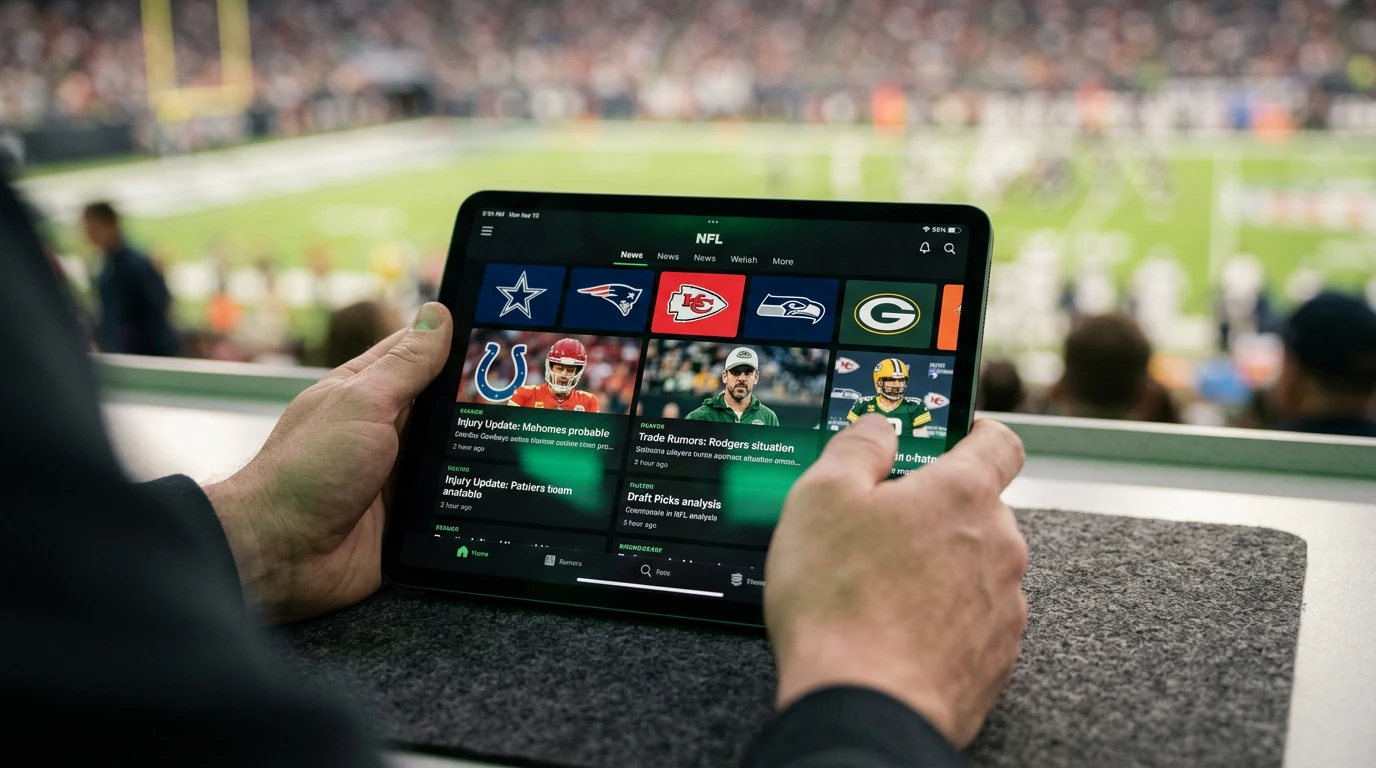
Your first move is to choose a primary news aggregator and customize it. Apps like ESPN or Bleacher Report are fantastic starting points because they allow you to select your favorite teams and players. This simple action transforms a generic flood of headlines into a focused briefing on what matters to you. A Nielsen Fan Insights report found that 68% of NFL fans primarily follow a single team, so leaning into that bias is actually a smart strategy for staying informed.
Think of it like building a fantasy team—you’re picking your top sources, not drafting the entire league. Select one or two teams you want to follow closely. From there, you might add a few of the Key NFL Players to Watch This Season to your feed, even if they aren’t on your favorite team. This gives you both depth on your chosen squad and a broader perspective on the league’s biggest stars.
Leveraging Social Media Smartly
Social media, particularly X (formerly Twitter), is the fastest source for breaking NFL news, but it’s also a minefield of misinformation. The trick is to curate your feed aggressively. Unfollow generic sports accounts and instead follow a handful of verified NFL insiders like Adam Schefter and Ian Rapoport. Their job is to break news, and they have the sources to back it up.
This is where X’s “Lists” feature becomes your MVP. You can create a private list containing only official team accounts and trusted reporters. This creates a dedicated timeline free of memes and fan arguments (and avoids the endless hot takes from your uncle’s fantasy league). But how do you tell a real report from a baseless rumor? Confirmed news almost always cites multiple sources or comes directly from the team or a top-tier journalist.
Discipline is everything on these platforms.
Setting Up Alerts for Breaking Stories
A passive approach to news means you’ll always be behind. To get ahead, you need to set up alerts for the stories that simply can’t wait. Most sports news apps allow for customized push notifications, and this is where you can filter the signal from the noise before it even hits your phone. Don’t just enable general notifications; that’s asking for trouble.
Instead, be highly selective. Set alerts for your favorite team’s final scores, major injury news, and trades. These are the events that have an immediate impact. Anything else, like post-game analysis or power rankings, can wait until you have time to sit down and read. This prevents notification fatigue and ensures that when your phone buzzes, it’s for something you actually need to know right now.
Tools for Real-Time Updates
Beyond app notifications, a few other tools can sharpen your edge. Google Alerts is an underrated resource for tracking more specific topics. For example, if you’re interested in the contract negotiations of a single player or want to follow news related to Fantasy Football Basics for Newbies, a keyword alert will email you new articles as they’re published.
Here is a simple checklist for more efficient news consumption:
- Pick One Aggregator: Choose a primary app (like theScore or CBS Sports) and customize it to follow your team.
- Curate Social Media: Follow no more than 5-7 verified national and local team reporters. Use a list to separate them from your main feed.
- Set Smart Alerts: Enable push notifications only for breaking news like injuries, trades, and final scores for your team.
- Timebox Your Reading: Dedicate 15-20 minutes in the morning or evening to catch up. Don’t let news checking bleed into your whole day.
Mastering your news flow isn’t just about saving time; it’s about building a better understanding of the league, which pays dividends when you start diving into more complex topics.
Beyond the Headlines: Understanding the ‘Why’ Behind the News
Headlines tell you what happened. The real fun is figuring out why. A star receiver dropping a game-winning pass isn’t just a blooper for the highlight reel; it’s a story. Was it a perfectly disguised defensive scheme, or is that player’s performance part of a larger trend? True fans know the final score is just the last page of the book.
Coaching decisions and team strategies are a massive piece of this puzzle. That gutsy fourth-down call wasn’t random—it was a calculated risk, likely based on weeks of analytical data identifying a specific weakness. As sports journalism professor Dr. Alistair Finch at Syracuse University explains, “Don’t just report the result; question the process. Ask why that specific play was called. That’s where the real NFL news context is.” This critical thinking separates casual viewers from dedicated fans.
When you start connecting these dots, from individual player stats to overarching team philosophy, the game becomes more than a game. A team hiring a new offensive coordinator isn’t just a staff change; it signals a potential shift from a run-heavy offense to a pass-first attack, a key theme in The Evolution of NFL Coaching Strategies. Suddenly, every pre-season report and trade rumor has deeper meaning. You’re no longer just watching; you’re analyzing.
Tools and Apps: Your Best Allies for Staying Informed
Stop scrolling endlessly through social media. The right app delivers exactly what you need—because who has time to check ten different sources before their morning coffee? A recent Nielsen report found that 68% of sports fans use a dedicated app for daily updates, yet many beginners download the first one they see and miss out on better features. Choosing the right tool is like picking your starting quarterback; it determines your entire strategy for staying informed.
Official NFL App: Your Primary Hub
Going straight to the source has its perks. The official NFL news app provides immediate access to game highlights, official stats, and live press conferences directly from the league. For anyone just learning the game, its direct pipeline for official rulings and explanations can be a great companion piece to understanding the basics, like those found in an Understanding NFL Rules for Beginners guide. This is your most direct line to the action.
The official app can feel a bit like state-run television. You’re only going to get the league-approved narrative, and the analysis rarely goes beyond the surface level. What most people miss is that the push notifications can be overwhelming unless you dive deep into the settings to customize them for just your favorite team.
Sports Media Giants: ESPN, CBS Sports & More
Apps from major outlets like ESPN, CBS Sports, and Bleacher Report offer a different experience entirely. These platforms provide not just scores but also in-depth analysis from a roster of experts, long-form articles, and podcasts that break down everything from player performance to complex team dynamics. They connect the dots, showing how specific plays relate to broader topics like The Evolution of NFL Coaching Strategies.
The trade-off is often a busier interface and the occasional paywall for premium content. Choosing between the official app and a media giant is like deciding between the raw game footage and the post-game analysis show. But which one cuts through the noise best? The data suggests—though not conclusively—that users stick with apps that offer superior analysis on the key NFL players to watch this season.
To simplify the choice, here’s a quick breakdown of top contenders.
Top 3 NFL News Apps at a Glance
- The NFL App: Best for official highlights and live game access (with a subscription). Its main drawback is the lack of critical, outside analysis.
- ESPN: A fantastic all-rounder with strong reporting and expert opinions. Be prepared for a constant stream of notifications and some content locked behind its ESPN+ subscription.
- The Athletic: The best option for deep, ad-free storytelling and analytics from top-tier writers. Its significant downside is the strict subscription model required to read virtually anything.
Once you find the right app and get your news feed dialed in, the next step is applying that knowledge. Using what you learn is the best way to get ahead of the curve, especially if you’re thinking about diving into the competitive world of fantasy football.
Avoiding Misinformation: Tips for Critical News Consumption
That blockbuster trade rumor you just saw is probably fake. The NFL news cycle is a 24/7 beast, and not all the information roaring out of it is true. Learning to spot the fakes from the facts is one of the most important skills for any fan. It’s the difference between being informed and being played.
Fact-Checking Your Sources
Before you react to a piece of news, look at who is reporting it. Is it a verified journalist with a long track record or a random account with a team logo as its profile picture? Treating all sources equally is like grabbing any carton of milk from the fridge without checking the expiration date. You might get lucky, but you’re risking a bad outcome.
A good habit is to practice source triangulation. If a major story breaks, wait to see if at least two or three other reputable outlets report the same thing. If only one obscure blog is running with a story about a star player demanding a trade, chances are it’s not solid. Patience is your best defense against misinformation.
Recognizing Clickbait and Speculation
Headlines are often the biggest red flag. Phrases like “sources say,” “is believed to be,” or headlines that end in a question mark are indicators of speculation, not confirmed news. This kind of content isn’t necessarily fake, but it’s not a fact—it’s a calculated guess designed to generate clicks and engagement. The underrated factor here is understanding the business model; engagement pays the bills, even if the story is thin.
Consider the widely debunked rumor from a few seasons ago that a Pro Bowl wide receiver was being traded for three first-round picks. The story originated from a parody social media account, but because it was so shocking, aggregator sites picked it up without verification. A study from the Poynter Institute found that sensationalized headlines are 63% more likely to be shared, regardless of their accuracy. The rumor spread like wildfire for hours before national reporters confirmed it was completely fabricated, but the damage was done. It was a classic case of wishful thinking overriding critical thinking in sports.
Understanding Reporter Credibility
Not all reporters are created equal. In the world of sports media, there’s a clear hierarchy of information. You have national insiders, local beat writers who cover a specific team day-in and day-out, and content aggregators who simply repackage other people’s reporting. So how do you know who to trust?
Think of it as a pyramid. The top is the smallest group with the most reliable information, and the base is the largest group with the least original reporting. Learning who belongs where is key to not falling for every rumor.
Who to Trust in the NFL World
Your gold standard should be the national NFL insiders. These are the reporters who have built careers on breaking news and maintaining relationships with agents, coaches, and front-office executives. People like Adam Schefter (ESPN) and Ian Rapoport (NFL Network) are at the top of this list. When they report something as fact, it’s almost always legitimate.
Just below them are the dedicated, local beat writers for each of the 32 teams. These journalists provide deep, nuanced coverage that national reporters might miss, especially concerning things like minor injuries or locker-room dynamics. They are excellent sources for day-to-day news. Finally, you have the aggregators and fan-run accounts. While they can be great for seeing everything in one place, you must verify NFL news they post by tracing it back to a primary source—one of the reporters mentioned above.
Becoming a savvy news consumer protects you from fake stories and deepens your understanding of how the league actually operates, beyond the noise.
From Follower to Forecaster: Your Next Play
Mastering your NFL news flow isn’t the end goal; it’s the beginning of a much more engaging way to experience the sport. With a clear, filtered stream of information, you’re no longer just reacting to what happened last Sunday. Instead, you’re equipped to anticipate what might happen next—predicting roster moves, understanding coaching tendencies, and identifying breakout players before they make the headlines. This deeper knowledge transforms passive viewing into an active, analytical exercise.
The real value lies in applying this insight. It sharpens your fantasy football instincts, fuels more intelligent debates with fellow fans, and deepens your appreciation for the strategic complexity of the game. You’ve built the foundation for not just following the league, but understanding its currents. Now that you can filter the news, which underlying team trend or player narrative will you start tracking to get ahead of the curve?
Frequently Asked Questions
What are the best free apps for NFL news?
For free, broad coverage, apps like ESPN, theScore, and Bleacher Report are excellent choices. They offer a great mix of breaking news alerts, scores, and expert analysis. Their key feature is the ability to customize your feed by selecting favorite teams and players, ensuring you get the updates that matter most to you.
How can I quickly catch up on a week’s worth of NFL news?
To catch up efficiently, focus on weekly recap content. Watch condensed shows like NFL RedZone’s weekly highlights or listen to a league-wide recap podcast. use your preferred news app’s “Top Stories” section for a curated summary of the most significant events you may have missed.
Is social media reliable for NFL news?
Social media can be the fastest source for news, but its reliability depends entirely on who you follow. Stick to verified national insiders like Adam Schefter and Ian Rapoport, along with official team accounts. Using features like X’s “Lists” to create a curated feed of trusted reporters is the best way to filter out baseless rumors and fan speculation.
What’s the difference between a ‘highlight’ and a ‘recap’?
A ‘highlight’ is a short video clip of a single, significant play, such as a spectacular touchdown or a game-changing interception. A ‘recap’ is a broader summary, either in text or video form, that tells the story of the entire game, including the final score, key statistics, and major turning points.
How do I know if an NFL news source is credible?
Credible sources are typically established media outlets with a long history of journalistic standards. Look for reporters who cite their sources, issue corrections when they make mistakes, and provide balanced analysis rather than just opinion. Be cautious of anonymous accounts or blogs that present rumors as confirmed facts without verification.