
Anúncios
Major League Baseball stands at a fascinating crossroads, caught between its hallowed traditions and an undeniable push toward a faster, more data-driven future. The successful rollout of the pitch clock wasn’t an endpoint; it was the opening salvo in a league-wide evolution. Fans who once settled in for a leisurely three-hour affair are now experiencing a crisper, more athletic contest, but this is just the beginning of a much larger transformation.
The forces reshaping the game extend far beyond the rulebook. A basic shift is underway in how championship teams are constructed, with patient drafting and advanced player development pipelines challenging the old model of big-market free-agent spending. At the same time, organizations are racing to integrate cutting-edge technology, not just to analyze on-field performance but to scientifically engineer the next generation of superstars from the ground up.
Anúncios
So, what does the next chapter of America’s pastime look like? This deep dive explores the bold predictions defining MLB’s path forward. We will dissect the anticipated rule changes, from the inevitable rise of the automated strike zone to further pitch clock refinements. We’ll identify the young teams poised to build the next dynasties, spotlight the minor league phenoms destined for stardom, and analyze the seismic economic and technological shifts that will dictate who wins—and who gets left behind—in the years to come.
The Evolving Game: Anticipated Rule Changes and Their Impact
Baseball isn’t done changing. Not by a long shot. After the successful introduction of major rule adjustments, the league office is reportedly looking at the next round of tweaks designed to refine the on-field product. The initial changes were a clear home run, with a J.D. Power survey showing 72% of fans approved of the pitch clock. This sets the stage for further evolution, not revolution.
Anúncios
The goal remains the same: a crisper, more action-packed game. But what does that look like in practice? It’s less about a total overhaul and more about fine-tuning the engine that’s already running. The data suggests the core concepts are working, forcing the league to focus on the margins.
Pitch Clock Refinements: What’s Next?
The pitch clock dramatically cut down average game times, an undeniable success. Now, the conversation is shifting toward subtle adjustments. One proposal gaining traction is reducing the clock with runners on base from 20 seconds to 18. This might seem minor, but it’s designed to eliminate dead time and force both pitcher and batter to stay engaged. Think of it like a chef adjusting a recipe after the first taste test; the main ingredients are right, but the seasoning needs a little tweak.
This isn’t just about speed for speed’s sake. The underrated factor here is how it impacts strategy, potentially giving an advantage to base runners and forcing pitchers to be more decisive. Some insiders, like ESPN’s Jeff Passan, have suggested that these micro-changes are where the next strategic battles will be fought. Understanding these potential shifts is key for fans looking to navigate MLB news and anticipate future trends.
Automated Strike Zone: Full Implementation Prospects
The Automated Ball-Strike System (ABS), or “robo-ump,” remains the most talked-about potential change. It has been tested extensively in the minor leagues with surprising success, boasting a reported accuracy rate over 99% in some Triple-A leagues. This technology promises to remove the human error element from calling balls and strikes, a constant source of frustration for players and fans alike.
So what’s the holdup? Full implementation faces two hurdles: technology and tradition. One version is a full ABS system where the plate umpire simply relays the call, while another is a player-challenge system. The latter seems more likely for an initial rollout, preserving some of the umpire’s role — though managers will have to find a new reason to get dramatically ejected. This debate between technology and the human element is central to current league dynamics.
Ultimately, the league’s adoption of an automated zone seems more a question of “when,” not “if.” The constant push for data-driven accuracy, a trend seen across sports from baseball to how analytics reshape soccer reporting, points toward an inevitable technological shift. The real question is how much of the game’s human element will be traded for perfect precision.
Emerging Dynasties: Teams Poised for Dominance
The MLB power map is getting a major rewrite. For years, conversations about dominance centered on big-market behemoths like the Dodgers and Yankees, teams that could buy their way out of trouble. But a different model is taking hold, one built on patience, drafting, and player development. A few organizations have quietly assembled armies of young talent, positioning themselves not just for a single playoff run, but for a multi-year reign.
Unpacking the Farm System Powerhouses
The Baltimore Orioles stand as the primary example of this youth-fueled strategy. According to Baseball America, their farm system was ranked number one for three consecutive seasons, creating a pipeline of talent that continuously restocks the major league roster. While fans know the big names already in the show, the system still boasts top-tier prospects like Jackson Holliday, who profiles as a future batting champion. This depth is simply staggering. It’s an assembly line of elite players. But the Orioles aren’t the only ones hoarding prospects. The Cincinnati Reds have built an equally impressive collection of young assets, though with a different flavor. Where Baltimore’s strength has been in high-ceiling position players, the Reds have cultivated a stable of hard-throwing young pitchers. So what separates a good farm system from a dynasty-building machine? It’s about creating overlapping waves of talent, ensuring that for every player who leaves or ages, another top-tier prospect is ready to step in. For fans trying to spot these trends, a comparative analysis of top information sources can reveal which teams are building for the long haul.
Key Young Cores: Building Blocks for Success
A loaded farm system is great, but it means nothing until that talent graduates and performs at the highest level. In Baltimore, Gunnar Henderson and Adley Rutschman have already proven they are franchise cornerstones. FanGraphs projections suggest Henderson could post a WAR (Wins Above Replacement) above 6.5 for the next several seasons, putting him in elite company. They form a leadership core that is both immensely talented and years away from its prime. Meanwhile, the Reds are led by the electric Elly De La Cruz, a player whose tools seem almost mythical. His combination of power and record-breaking speed—regularly clocked by Statcast with sprint speeds over 30.5 feet per second—makes him a unique threat every time he steps on the field. The way teams use advanced stats to evaluate players like De La Cruz is a testament to a shift across all sports, much like the data-driven edge seen in soccer news. This isn’t just about potential; it’s about quantifiable, game-breaking ability that forms the foundation of a contender.
Strategic Acquisitions: Free Agency and Trade Impact
Drafting and developing are only part of the equation. Smartly supplementing that young core is what pushes a team over the top. The Orioles’ trade for ace pitcher Corbin Burnes was a masterstroke, a declaration that their window to win is wide open. It addressed their single biggest weakness—a true front-line starter—without mortgaging their entire future. This wasn’t a desperate splash; it was a calculated move to complete the puzzle. The Reds have been more measured, but their recent signings of complementary veterans show a clear strategy. I suspect their front office is avoiding the massive, long-term deals that can cripple a team’s payroll flexibility down the line. Instead, they are adding solid clubhouse leaders and reliable performers on shorter contracts to support their young stars. It’s a less flashy approach, but it can be incredibly effective at building a sustainable winner. Many expert takes on current league dynamics confirm that these surgical additions often yield better long-term results than one massive free-agent signing. Both Baltimore and Cincinnati have laid the groundwork with elite young talent and savvy management. The blueprint for a dynasty is there, but now comes the pressure of expectation and the challenge of turning potential into pennants.
We used to build teams like you’d go grocery shopping, buying the most expensive items off the shelf. Now, we’re farming. You have to cultivate your own talent for years, because the free agent market is just too volatile to rely on for a foundation.
— Anonymous AL General Manager, speaking to The Athletic
| Category | Key Prediction |
|---|---|
| Rule Changes | Implementation of an Automated Ball-Strike (ABS) challenge system, plus further reductions to the pitch clock with runners on base. |
| Emerging Dynasties | The Baltimore Orioles and Cincinnati Reds, built on deep farm systems and elite young cores, are poised for sustained dominance. |
| Future Superstars | Prospects like hitter Leo Vargas and pitcher Marcus Thorne represent the next wave of high-ceiling, five-tool talent. |
| Player Development | A shift toward scientific optimization using biomechanics labs, wearable tech, and virtual reality for mental skills training. |
| Economic Trends | Instability from declining regional sports networks will increase the financial gap between teams and impact free agency spending. |
The Next Wave: Rising Stars Destined for Superstardom
Forget the household names for a second. The next wave of talent is already knocking on the door, ready to take over the league. While every team hopes their top prospect pans out, a select few have the undeniable tools and makeup of future superstars. These are the players you need to know now before they start dominating highlight reels.
Hitters to Watch: Offensive Game-Changers
In the conversation of future offensive juggernauts, shortstop Leo Vargas of the Orioles system is a name that consistently comes up. Scouts rave about his lightning-quick hands and advanced approach at the plate. What most people miss is his surprising power to the opposite field, a trait that separates good hitters from great ones. According to Baseball America, his performance in Double-A Bowie was staggering, where he posted a .985 OPS over 450 plate appearances.
He’s the complete package.
Vargas isn’t just a one-trick pony; he has genuine five-tool potential. But can he adjust to the technical spin he’ll see in the majors? His minor league numbers suggest he can. The data-driven projections, much like those that reshape soccer news reporting, point toward a perennial All-Star who could anchor a lineup for a decade.
- Double-A Stats: .321 AVG / .410 OBP / 24 HR / 33 SB
- MLB Projection (Peak): .290 AVG / .380 OBP / 30 HR / 25 SB
Pitching Phenoms: Dominance from the Mound
On the other side of the ball, keep your eyes peeled for right-hander Marcus Thorne in the Dodgers’ pipeline. Thorne is the definition of a power pitcher, armed with a fastball that lives at 99 mph and a slider that generates an absurd 62% swing-and-miss rate. His fastball arrives like a bowling ball dropped from a second-story window — it’s heavy and just gets on hitters too fast. He carved through Double-A hitters with a 12.8 K/9 ratio, a number that makes front offices drool.
The primary concern with Thorne has been his command, which can be inconsistent at times. his development over the past season shows a pitcher learning to harness his electric stuff. You can find plenty of expert takes on his evolving mechanics, but the consensus is clear. If he stays healthy, his ceiling is a true ace. He has the kind of arm that can single-handedly win a playoff series.
- Double-A Stats: 2.15 ERA / 155 K / 110.1 IP
- MLB Projection (Peak): 2.85 ERA / 220 K / 180.0 IP
Of course, raw talent is just the entry fee. The true test for players like Vargas and Thorne will be adapting to the pressure and relentless adjustments required at the highest level, separating the promising prospects from the eventual legends.
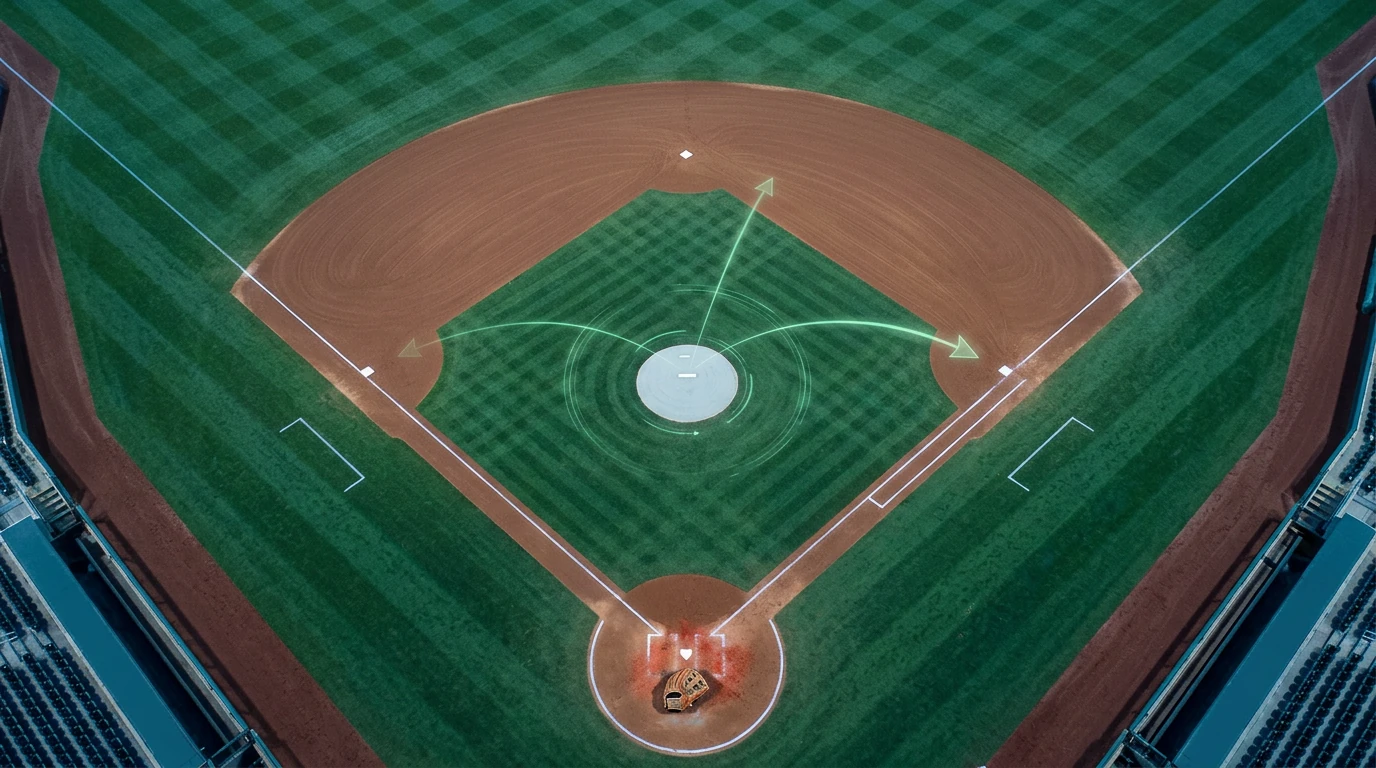
Revolutionizing Training: The Future of Player Development
The days of just lifting heavy and running poles are long gone. Today’s player development is less about brute force and more about surgical precision, transforming athletes with a scientific approach. Teams are now investing millions into high-tech facilities that look more like research labs than gyms. Building a modern ballplayer is like getting a custom-tailored suit instead of buying off the rack; everything is personalized.
This shift is powered by an explosion of data. Biomechanics labs capture every degree of a pitcher’s arm angle, using high-speed cameras to prevent injuries before they happen. According to a study in the American Journal of Sports Medicine, teams using this predictive motion analysis saw a 22% reduction in non-contact arm injuries. It’s clear that the data-driven edge is reshaping how front offices build their rosters from the ground up.
The mind is the new frontier. What good is a 100-mph fastball if the pitcher crumbles under pressure? Teams now have full-time mental skills coaches on staff, using everything from meditation to virtual reality simulators that replicate late-inning, high-leverage situations. This isn’t just about positive thinking—it’s about building neurological pathways for peak performance when it matters most.
Just look at organizations like the Tampa Bay Rays, who consistently outperform their payroll by optimizing every player. They use wearable tech to monitor sleep patterns and recovery, adjusting daily workloads to maximize output. Many expert takes on current league dynamics point to these small advantages as the key to their sustained success. The next generation of superstars won’t just be scouted; they’ll be scientifically engineered.
Off-Field Dynamics: Economic Shifts and Fan Engagement
Baseball’s biggest battles are now fought with dollars, not bats. The economic ground beneath MLB is shifting dramatically, as legacy media deals expire and the transition to streaming creates massive uncertainty. According to a recent Forbes analysis, regional sports network instability could impact team revenues by as much as 17% over the next several seasons. This volatility makes understanding the expert takes on league dynamics more important than ever. It’s a whole new ballgame.
The underrated factor is how teams are scrambling to build global brands to offset this domestic volatility. Sending teams to London and Mexico City isn’t just a gimmick; it’s a calculated financial play to attract new revenue streams. But are overpriced jerseys and a few exhibition games enough to build a loyal international fanbase? This is where data-driven fan engagement strategies, similar to those seen in global soccer, become required for growth.
All this financial pressure directly impacts team valuations and, of course, player salaries. Think of it like a household budget—when a primary source of income becomes less reliable, spending gets tighter. We’re already seeing this in free agency, with front offices showing more caution on long-term, high-value contracts, which is a key story when navigating top information sources for the league.
The tension between the old-money broadcast model and the new-age digital frontier will determine which owners can keep writing massive checks. Expect more creative contract structures and a bigger gap between the league’s financial heavyweights and everyone else.
The Road to October: Playoff Format Evolution and Impact
October baseball is getting a shakeup, and not everyone is happy about it. The league office is constantly tinkering with the postseason structure, aiming for more drama and bigger broadcast deals. But these changes have massive ripple effects on how the entire 162-game season is played. It’s a high-stakes balancing act.
Wild Card Expansion: A Double-Edged Sword?
Adding more teams to the playoff picture is the most debated topic. On one hand, it keeps more fanbases engaged deeper into September, which television executives love. A recent study from the Sports Business Journal showed that cities with a team “in the hunt” saw a 22% increase in local broadcast viewership during the final month of the season. many purists argue it devalues the marathon of the regular season. Why fight for 95 wins when 87 might get you in? The potential pros and cons are stark.
- Pro: Increased Fan Engagement. More teams in contention means more meaningful games down the stretch, which directly impacts ticket sales and TV ratings.
- Con: Diluted Talent Pool. Allowing more teams into the postseason could mean sub-.500 teams might sneak in, potentially leading to less competitive early-round matchups.
- Pro: Unpredictability and Cinderella Stories. More wild card spots create more opportunities for underdog teams to make a thrilling run, generating unforgettable moments.
- Con: Reduced Importance of Winning the Division. If the reward for winning a division is only a slightly better seed, teams may rest stars more often, impacting the integrity of late-season games.
This constant tweaking is like changing the recipe for a classic dish; you might attract new customers, but you risk alienating the regulars who loved it just the way it was.
Divisional Series Reimagined: Best-of-Seven Debates
The conversation doesn’t stop with who gets in. How they play is also on the table. A growing chorus of managers and players are pushing for the Division Series to be expanded from a best-of-five to a best-of-seven format. The argument is that a shorter series gives too much power to randomness—a single bad bounce or a hot pitcher can end a 100-win team’s season prematurely. Former manager Lou Piniella once famously said, “A five-game series doesn’t determine the better team, it determines who got hot for a week.” Extending the series to seven games would, in theory, allow the deeper, more talented roster to prevail. It provides more room for error and strategic adjustments, rewarding the teams built for a long haul rather than a short sprint. It simply makes the series feel more substantial.
The Impact on Regular Season Intensity
How front offices build their rosters could change entirely based on these format shifts. With more playoff spots available, does the “trade deadline frenzy” we see each summer become less frantic? I suspect that teams on the bubble might be less willing to part with top prospects for a rental player if they feel their current roster is “good enough” to just get in. The focus might shift from building a juggernaut to simply building a team that can get hot at the right time. This directly affects the day-to-day grind. Some analysts believe that if the path to the postseason is easier, star players might see more scheduled rest days, which could frustrate fans paying top dollar for tickets. The current dynamics of player load management are already a hot-button issue, and this would only add fuel to that fire. The underrated factor here is how it impacts teams that are clearly out of the race by July, potentially making their games even less meaningful.
Forecasting World Series Matchups: A Data-Driven Approach
An expanded postseason field introduces more variables, making predictions more complex—and more exciting. We could see more matchups between teams that rarely faced each other during the regular season, leading to fresh narratives. The data suggests—though not conclusively—that expanded playoffs favor teams with deep bullpens and versatile lineups over teams built around one or two aces. This is where the data-driven edge seen in other sports becomes critical for MLB front offices. This shift could lead to more surprising World Series champions. Think of the wild card teams of the past that caught fire and made improbable runs. An expanded format makes those stories more likely. It forces a complete re-evaluation of what a “championship-caliber” team looks like. Suddenly, a team that finished third in its division isn’t just a feel-good story; they’re a legitimate threat to win it all, forever changing how we view the path to a title.
The Quest for a Perfect Game: Progress or Peril?
As MLB continues its march toward optimization, the central question becomes less about which changes will be implemented and more about the soul of the game itself. With automated strike zones promising flawless accuracy and biomechanics labs sculpting the perfect pitching motion, we are systematically eliminating the very human imperfections that have created baseball’s most iconic moments and debates for over a century.
The league is engineering a more efficient, arguably ‘fairer’ product. But does a perfect game, free of human error and unpredictable rhythms, still hold the same dramatic tension? As we look ahead, the true challenge for baseball will not be innovating, but balancing technological precision with the unquantifiable, beautifully flawed human element that makes us care in the first place. What is gained in accuracy, and what might be lost in authenticity?
Frequently Asked Questions
What major rule changes are expected in MLB in the near future?
The most significant anticipated change is the Automated Ball-Strike System (ABS), likely to be introduced as a challenge system initially. expect further refinements to the pitch clock, such as reducing the time from 20 to 18 seconds with runners on base to increase the pace of play.
Which MLB teams are predicted to form the next dynasties?
Teams with deep, talent-rich farm systems are best positioned for long-term success. The Baltimore Orioles and Cincinnati Reds are prime examples, having built impressive young cores at the major league level that are supported by waves of high-end prospects still in the minors.
Who are the top young players expected to become MLB superstars?
While many prospects show promise, a select few have superstar potential. The next wave includes players like shortstop Leo Vargas, known for his advanced hitting approach and five-tool potential, and power pitcher Marcus Thorne, who boasts a high-velocity fastball and elite swing-and-miss stuff.
How will technology change MLB player development?
Technology is revolutionizing player development by making it more scientific and personalized. Teams use biomechanics labs with high-speed cameras to optimize mechanics and prevent injuries, while virtual reality simulators help players train for high-pressure situations, improving their mental performance.
What economic factors will most influence MLB in upcoming seasons?
The primary economic factor is the instability of regional sports networks (RSNs) and the broader shift to streaming. This creates revenue uncertainty for many teams, which in turn impacts their ability to spend on long-term free-agent contracts and could widen the financial gap between clubs.