Maximize Your College Sports Scholarship for 100% Tuition by 2026
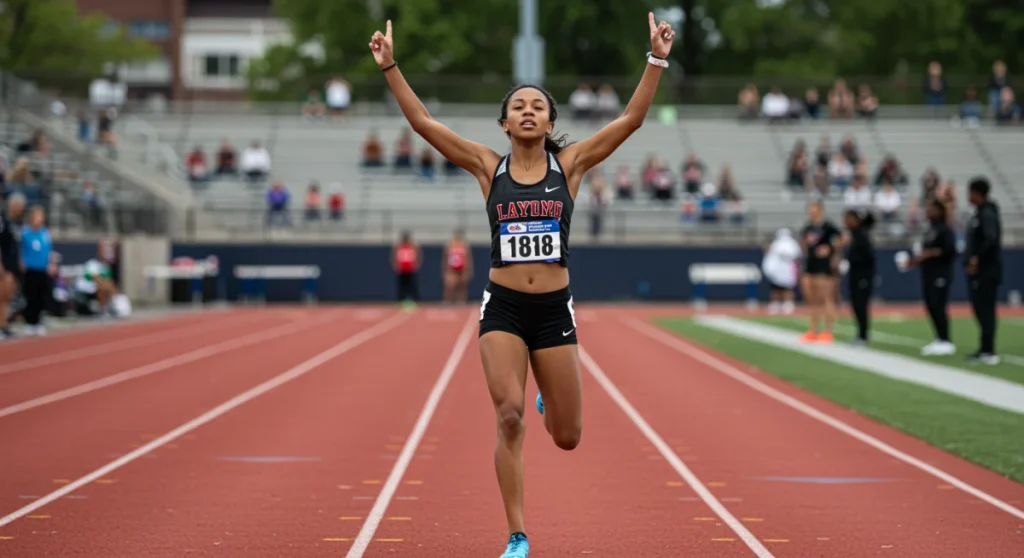
Securing a 100% college sports scholarship by 2026 requires a strategic approach combining athletic prowess, academic achievement, and proactive engagement with college coaches and financial aid offices. Early planning and consistent effort are key.
Are you dreaming of competing at the collegiate level while also covering the soaring costs of higher education? Achieving a college sports scholarship that fully covers tuition by 2026 is an ambitious yet attainable goal for dedicated student-athletes. This guide will provide insider strategies to navigate the complex world of athletic recruitment and financial aid, setting you on a clear path to success.
Understanding the Scholarship Landscape
Before diving into specific strategies, it’s crucial to grasp the current college sports scholarship environment. Not all scholarships are created equal, and understanding the differences between various types can significantly impact your approach. The NCAA, NAIA, and NJCAA each have distinct rules and scholarship limits that directly affect how much aid you can receive.
Division I and II NCAA schools offer athletic scholarships, but only Division I can offer full scholarships in headcount sports, which are sports where a fixed number of scholarships are awarded regardless of the number of players. Equivalency sports, on the other hand, allow coaches to divide scholarship money among multiple athletes, often resulting in partial scholarships. NAIA and NJCAA schools also provide valuable opportunities, often with more flexibility in scholarship distribution.
NCAA Divisions and Scholarship Types
- NCAA Division I: Offers both headcount and equivalency scholarships. Headcount sports (e.g., Football FBS, Men’s & Women’s Basketball, Women’s Gymnastics, Women’s Tennis, Women’s Volleyball) can provide full rides. Equivalency sports (e.g., Baseball, Track & Field, Swimming, Soccer) distribute scholarship funds among athletes.
- NCAA Division II: All sports are equivalency sports, meaning full scholarships are less common and typically require a combination of athletic and academic aid.
- NCAA Division III: Does not offer athletic scholarships. Aid is based solely on academic merit and financial need, though athletes often receive significant financial packages.
Understanding these distinctions is your first step. It helps you target schools and divisions that align with your athletic ability and financial needs, optimizing your chances for a 100% tuition coverage. Researching specific sport scholarship limits at each division is paramount.
In essence, the landscape is diverse, requiring a tailored strategy. Your athletic talent is a key component, but knowing where that talent can be best leveraged for maximum financial benefit is equally important. This foundational knowledge will inform every subsequent step in your scholarship pursuit.
Academic Excellence: Your Non-Negotiable Asset
While athletic talent opens doors, academic excellence keeps them wide open, especially when aiming for a full tuition scholarship. Coaches are looking for well-rounded individuals who can succeed both on the field/court and in the classroom. Strong grades not only make you a more attractive recruit but also qualify you for academic scholarships and grants, which can be combined with athletic aid to reach 100% tuition coverage.
Maintaining a high GPA and achieving competitive standardized test scores (SAT/ACT) are critical. Many universities have minimum academic requirements for athletic eligibility, and exceeding these can set you apart. Academic success demonstrates discipline, work ethic, and the ability to manage a demanding schedule—qualities highly valued by college programs.
Boosting Your Academic Profile
- High GPA: Aim for a 3.5 GPA or higher. This often makes you eligible for institutional academic scholarships that can stack with athletic aid.
- Strong Test Scores: Prepare for and retake the SAT/ACT if necessary to achieve scores that meet or exceed the average for your target universities.
- Challenging Coursework: Take AP, IB, or honors classes. This demonstrates academic rigor and prepares you for college-level studies.
Don’t underestimate the power of your academic transcript. It’s often the tie-breaker between equally talented athletes. Coaches want to minimize risks, and a solid academic record reassures them that you will remain eligible and contribute positively to the campus community. Furthermore, strong academics can open up opportunities at more selective institutions, which may have larger endowments and thus more financial aid available.
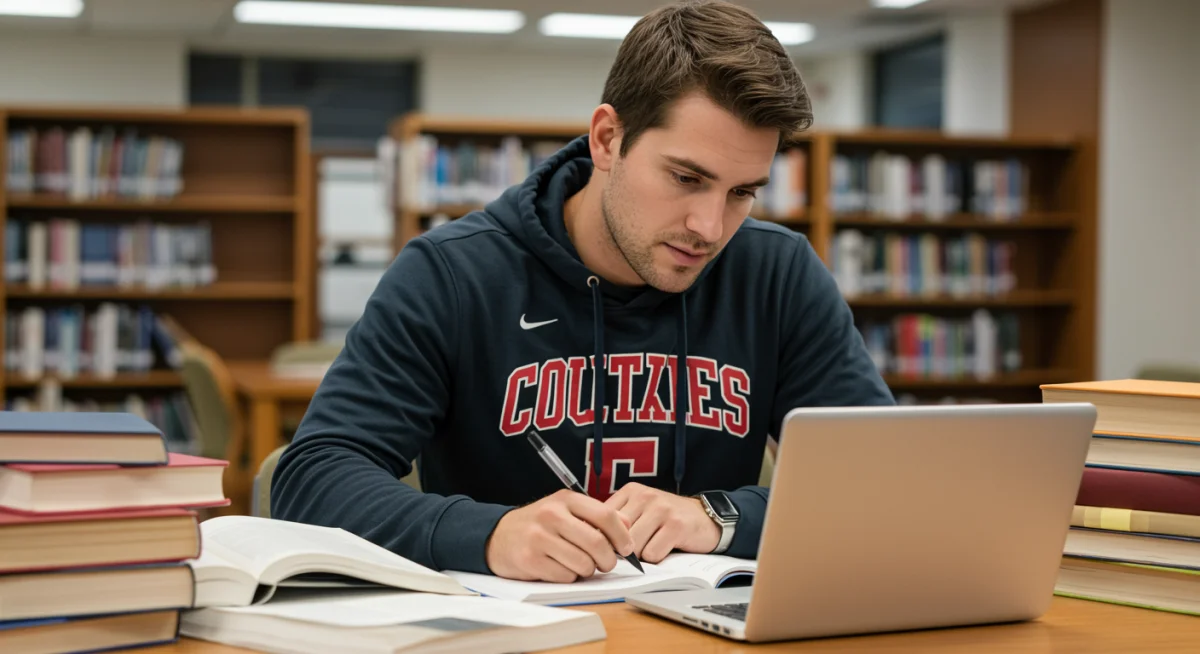
Balancing rigorous training with demanding coursework requires excellent time management and dedication. This balance not only prepares you for the challenges of college but also showcases your maturity and commitment to future coaches. Prioritizing your studies is just as important as perfecting your athletic skills.
Strategic Recruitment and Communication
Proactive and strategic recruitment is vital for securing a full college sports scholarship. Waiting for coaches to discover you is a passive approach that often yields limited results. Instead, you need to actively market yourself and initiate communication with college coaches as early as possible. This process involves creating a compelling athletic profile, producing high-quality highlight reels, and consistently reaching out to programs that fit your athletic and academic aspirations.
Start your recruitment process during your freshman or sophomore year of high school. Identify a list of target schools across various divisions (DI, DII, NAIA) that are a good fit both athletically and academically. Personalize your communications and demonstrate genuine interest in each program. Generic emails are often ignored, so show that you’ve done your homework on their team, coaching staff, and academic offerings.
Key Recruitment Steps
- Create a Professional Athletic Profile: Include your academic transcripts, athletic stats, awards, and contact information for coaches and counselors.
- Develop a High-Quality Highlight Reel: Showcase your best plays and skills. Keep it concise (2-5 minutes) and easy to access (e.g., YouTube link).
- Proactive Communication: Send introductory emails to coaches, attend college camps and showcases, and follow up consistently. Mention specific reasons why their program appeals to you.
Building relationships with coaches is paramount. Attend their camps, visit campuses, and engage in meaningful conversations. These interactions allow coaches to get to know you beyond your stats and highlight reel. Remember, coaches are looking for athletes who will be a good fit for their team culture and who demonstrate leadership potential and a strong work ethic. Effective communication and a genuine interest in their program can significantly boost your chances of being noticed and recruited.
Leveraging Financial Aid Beyond Athletics
Achieving 100% tuition coverage often means combining an athletic scholarship with other forms of financial aid. This multi-faceted approach is crucial, especially for athletes in equivalency sports or at Division II schools where full athletic scholarships are less common. Understanding and applying for academic scholarships, grants, and need-based aid can bridge the gap between a partial athletic scholarship and full tuition coverage.
Start by completing the Free Application for Federal Student Aid (FAFSA) as early as possible. This form determines your eligibility for federal grants, work-study programs, and federal student loans. Many institutional and state-based aid programs also use FAFSA data, so it’s a critical first step. Additionally, research and apply for external scholarships from private organizations, community groups, and foundations. These can be based on academic merit, extracurricular activities, specific demographics, or even unique talents.
Exploring Additional Financial Resources
- Academic Scholarships: Many universities offer scholarships based on GPA, test scores, and specific academic achievements.
- Grants: Federal Pell Grants and state grants do not need to be repaid and are typically need-based.
- External Scholarships: Look for scholarships from local businesses, national organizations, and specialized foundations. Websites like Fastweb, Scholarship.com, and College Board are excellent resources.
Don’t be afraid to ask financial aid offices about scholarship stacking policies. Some institutions allow you to combine various forms of aid, while others have limits. Open communication with both athletic department staff and financial aid counselors is essential to understand the full scope of your potential financial package. By diversifying your financial aid applications, you significantly increase your likelihood of securing comprehensive tuition coverage.
The Role of Exposure and Development
Consistent exposure and continuous athletic development are foundational to earning a college sports scholarship. Coaches recruit athletes they have seen perform, either in person or through reliable video. Therefore, participating in high-level club sports, showcases, and national tournaments is paramount. These platforms provide opportunities to compete against top talent and get noticed by college scouts and coaches.
Beyond competitive exposure, ongoing skill development is non-negotiable. Work with specialized coaches, trainers, and mentors to refine your technique, improve your physical conditioning, and enhance your understanding of the game. Coaches are looking for athletes who are not only talented but also show potential for growth and a strong commitment to their sport. Documenting your progress and showcasing improvements in your highlight reels can further impress recruiters.
Maximizing Exposure and Development
- High-Level Competition: Play for competitive club teams that travel to national tournaments and showcases where college coaches recruit.
- Specialized Training: Invest in private coaching, strength and conditioning programs, and sports psychology to gain an edge.
- Summer Camps: Attend college-specific camps not only to showcase your skills but also to interact directly with coaching staff.
Remember that the recruitment process is continuous. Your performance in games, your attitude, and your sportsmanship are constantly being evaluated. Coaches want to see consistent effort and improvement over time. Building a reputation as a dedicated, coachable, and high-performing athlete will make you a more attractive candidate for a full scholarship. Your consistent presence and performance at key events will create a strong narrative for recruiters.
Navigating the Offer and Commitment Process
Once you start receiving scholarship offers, the navigation becomes critical. It’s not just about accepting the first offer; it’s about understanding the terms, comparing packages, and negotiating to potentially reach that 100% tuition coverage goal. Be prepared to ask detailed questions about what the scholarship covers (tuition, fees, room, board, books) and for how long it is guaranteed. Some scholarships are for one year and renewable, while others are multi-year commitments.
Don’t hesitate to use offers from one school as leverage in discussions with another, but always do so respectfully and professionally. If a school offers 80% tuition, inquire about opportunities to combine it with academic aid or other grants to close the gap. Sometimes, a coach might have additional funds or know of academic programs that can supplement the athletic scholarship. Always review the National Letter of Intent (NLI) carefully with your parents and a trusted advisor before signing.
Key Considerations for Offers
- Detailed Breakdown: Understand exactly what the scholarship covers (tuition, room, board, books, fees).
- Renewal Terms: Clarify the scholarship’s duration and renewal conditions. What happens if you get injured or don’t perform as expected?
- Negotiation: Politely discuss combining athletic aid with academic or need-based financial aid to maximize coverage.
The commitment process is a significant decision. Ensure the school is the right fit academically, socially, and athletically. A full scholarship is fantastic, but it’s equally important to be in an environment where you can thrive and be happy. Take campus visits, talk to current student-athletes, and get a feel for the overall culture. Making an informed decision will ensure your college experience is fulfilling on all fronts.
| Key Strategy | Brief Description |
|---|---|
| Academic Excellence | Maintain high GPA and strong test scores to qualify for academic aid and attract coaches. |
| Proactive Recruitment | Actively contact coaches, create highlight reels, and attend showcases early in high school. |
| Financial Aid Beyond Athletics | Apply for FAFSA, grants, and external scholarships to supplement athletic offers. |
| Continuous Development | Commit to ongoing skill improvement and seek high-level competition for exposure. |
Frequently Asked Questions About Sports Scholarships
Headcount sports offer a fixed number of full scholarships per team (e.g., Men’s and Women’s Basketball in NCAA DI), meaning a full ride for each recipient. Equivalency sports distribute a total scholarship fund among multiple athletes, often resulting in partial scholarships for many players.
Academics are extremely important. Strong grades and test scores not only ensure NCAA eligibility but also make you a more attractive recruit. They can also qualify you for academic scholarships that can be combined with athletic aid to achieve 100% tuition coverage.
It is recommended to start the recruitment process as early as your freshman or sophomore year of high school. This allows ample time to build relationships with coaches, develop your athletic profile, and gain exposure through camps and competitive events.
Yes, combining athletic scholarships with academic scholarships, grants, and need-based aid is a common strategy to achieve 100% tuition coverage. Always discuss scholarship stacking policies with the financial aid office and athletic department of your target schools.
Carefully evaluate each offer, considering what is covered, the duration, and renewal terms. Don’t hesitate to politely inquire about potential for increased aid or combining offers with other financial assistance. Always review the National Letter of Intent with an advisor.
Conclusion
Securing a 100% college sports scholarship by 2026 is an ambitious but entirely achievable goal, demanding a blend of athletic prowess, academic rigor, and strategic planning. By understanding the nuances of the scholarship landscape, prioritizing academic excellence, engaging in proactive recruitment, and diligently exploring all avenues of financial aid, student-athletes can position themselves for success. The journey requires dedication, consistent effort, and a keen understanding of how to market your unique talents. With these insider strategies, you can confidently pursue your collegiate athletic dreams while ensuring your educational future is fully funded.